
Hello kind grown-up,
Last week we explored the difference between fitting in and belonging. This week I’d like to turn that into something you can do with your child.
Every child needs somewhere to exhale. These places, people and moments act as emotional anchors, and children who can name them cope with hard days far better than children who can’t. They know where to go when things feel like too much.
Most children have never been asked about their belonging places. They have them, and they use them without noticing. Naming them makes them visible, and that gives the child something solid to return to.
Belonging comes in many forms:
Places. A bedroom corner, a window seat, a tree, a grandparent’s kitchen, the back seat of the car on a long journey, a den made from cushions.
People. The person whose presence settles a child’s whole body. This is often a surprise to adults, and it may be an aunt, a neighbour, a friend, or a teacher.
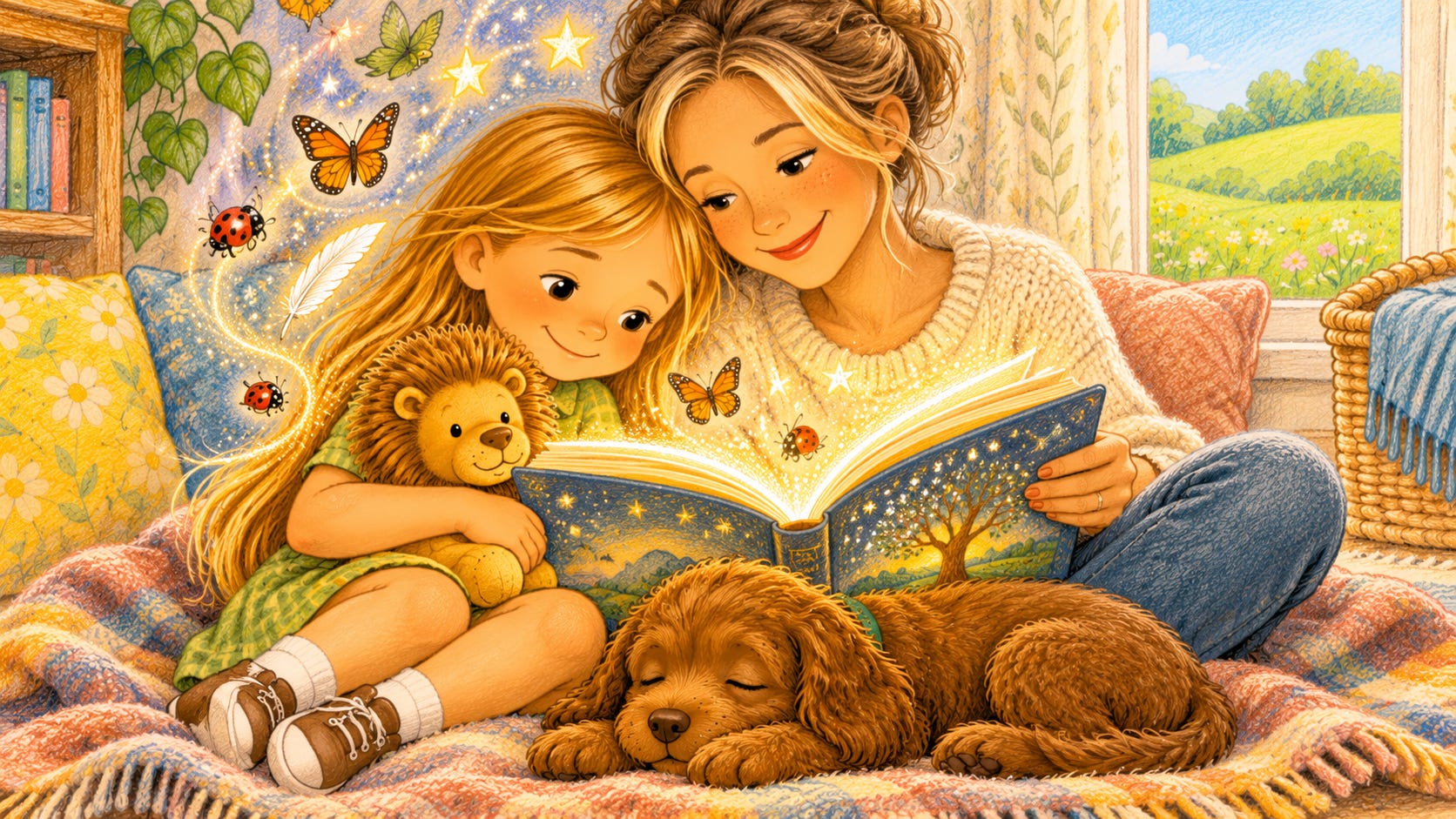
Moments. The sound of a key in the door. The smell of toast on a weekend morning. The end-of-day cuddle on the sofa. Rituals count.
Activities. Drawing, running, building, reading, or kicking a ball against a wall. Some children belong most fully when their hands or bodies are busy.
How to help your child find theirs:
Ask about feelings before you ask about places.
“When do you feel most like yourself? When does your body feel calm?” Then follow the answers wherever they lead. They may surprise you.
Draw a map together.
Scarlett draws hers in her notebook. A wobbly drawing with places, people and tiny moments scattered across it gives a child something they can see, add to, and return to.
Honour the small and strange.
A cupboard under the stairs is a perfectly good belonging place. So is the third step from the bottom, or a particular tree. Resist the urge to improve on a child’s choices.
Protect these places.
Children need their belonging places to stay safe and available. A hideout doesn’t need tidying, interrupting, or explaining. Sometimes the best thing we can do is leave it alone.
Share your own.
“I feel most like myself when I’m sitting in the garden with a cup of tea, before anyone else is up.” When children hear adults name their own belonging places, they learn that this is a normal and important part of being human.
A child who knows where they belong carries a quiet confidence into every room they enter. They know the way back.
With warmth,
Lenny 🦁
