
Hello kind grown-up,
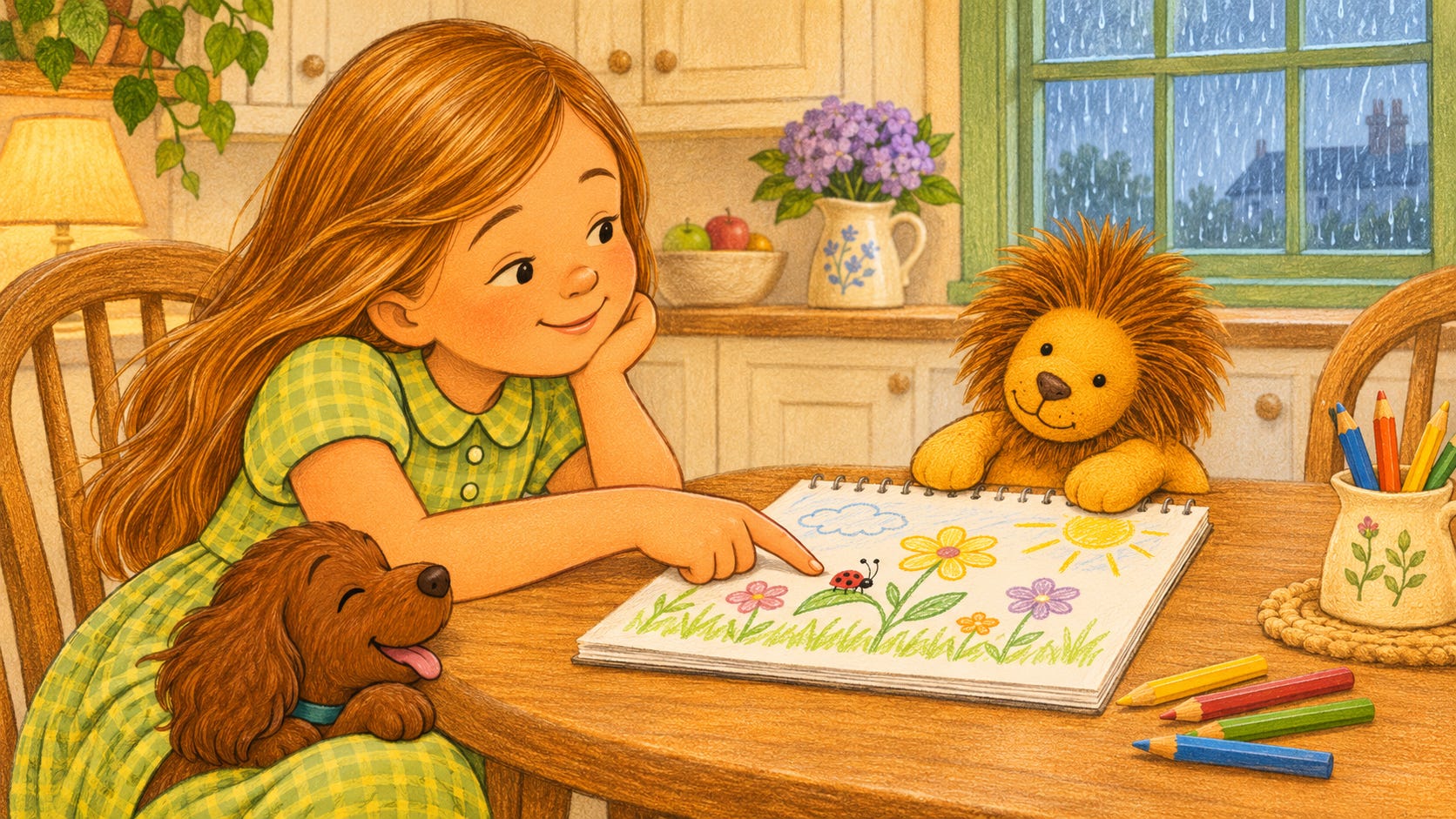
On Sunday, Scarlett drew a garden with a bright red door. The door was wobbly, one sunflower leaned rather dramatically, and a butterfly had one wing bigger than the other.
I sat beside her sketchbook while she frowned at the page.
“It’s not very good, is it?” she asked.
It’s the sort of question that makes you want to leap in with, “Of course it is! It’s beautiful.” I understand the urge. When someone you love is disappointed, reassurance is often the first thing you reach for.
So I asked Scarlett what she’d enjoyed about making it.
She remembered picking the colours. She showed me the tiny ladybirds she’d drawn on the leaves. And after a little while, she looked at the whole picture and said, “I did that.”
I wish you could have heard how quietly she said it.
Give their own answer a little room
There’s joy in hearing someone you love say, “I’m proud of you.” And there’s a lovely thing that can happen when we give children a little time to work out what they want to celebrate, too.
The next time your child brings you something they’ve made, you might say:
“I’d love to see. Is there a bit you especially want to show me?”
Or, when they’ve stuck with something difficult:
“I saw you go back and try again. What helped you decide to have another go?”
Then leave a little space. The detail they choose might surprise you. You might be admiring the finished picture while they’re thinking about the five minutes it took to get the ladybird just where they wanted it.
Let disappointment sit beside pride
Sometimes a child really does wish something had turned out differently. Scarlett wanted that red door to be straighter. She was also pleased she’d made a garden that felt like hers.
We can make room for both with something as simple as:
“You wanted that part to go differently. Is there a bit you’d keep just as it is?”
And if they’re still too disappointed to answer, you can sit with them for a little while. The question can wait.
Let them hear you notice your own effort
Children hear us say, “Oh, I made a mess of that,” quite readily. I wonder how often they hear us take a moment to be pleased with ourselves.
Perhaps next time you could say, “I’m glad I asked for help with that,” or, “I was nervous about making that call, and I’m proud I did it.”
Ordinary moments give children something they can recognise in their own lives. The phone call. The tricky button. The picture they nearly put away and decided to finish.
Before Scarlett put her garden on the windowsill, she wrote three little words at the bottom.
Made by me.
Then she sat beside the window and enjoyed being proud. Pudding rested his chin on her slipper. I stayed tucked under her arm. There was nothing more we needed to say.
With a great big lion-hearted hug,
Lenny 🦁💛
Dream big dreams. 🫶
